
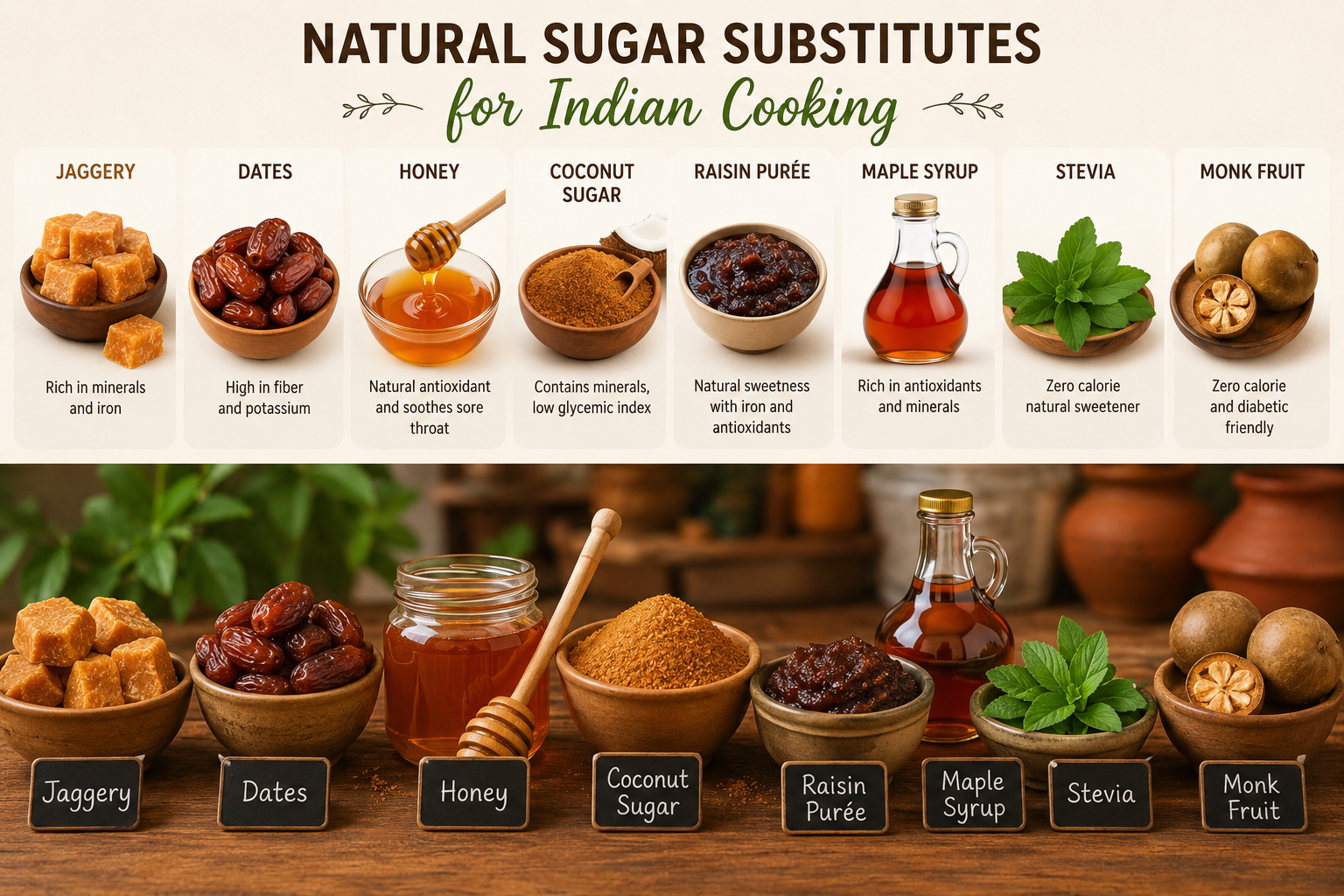
Indian cuisine is known for its rich, comforting flavors—and sweetness plays a starring role in everything from chai and kheer to laddoos and chutneys. But with growing awareness about the health risks of excess refined sugar, many home cooks are looking for better ways to satisfy their sweet tooth.
The good news? Indian kitchens have always relied on wholesome sweeteners long before white sugar became common. From jaggery to dates, there are several natural alternatives that can add sweetness while also contributing nutrients and depth of flavor.
In this guide, we’ll explore the best natural sugar substitutes for Indian cooking, how to use them, and which dishes they complement best.
Why Replace Refined Sugar?
Refined white sugar is heavily processed and offers calories without meaningful nutrition. Regular overconsumption may contribute to:
- Weight gain
- Blood sugar spikes
- Increased cravings
- Poor dental health
- Higher risk of metabolic issues
Natural sweeteners are not “free foods,” but many contain minerals, antioxidants, and a lower degree of processing.
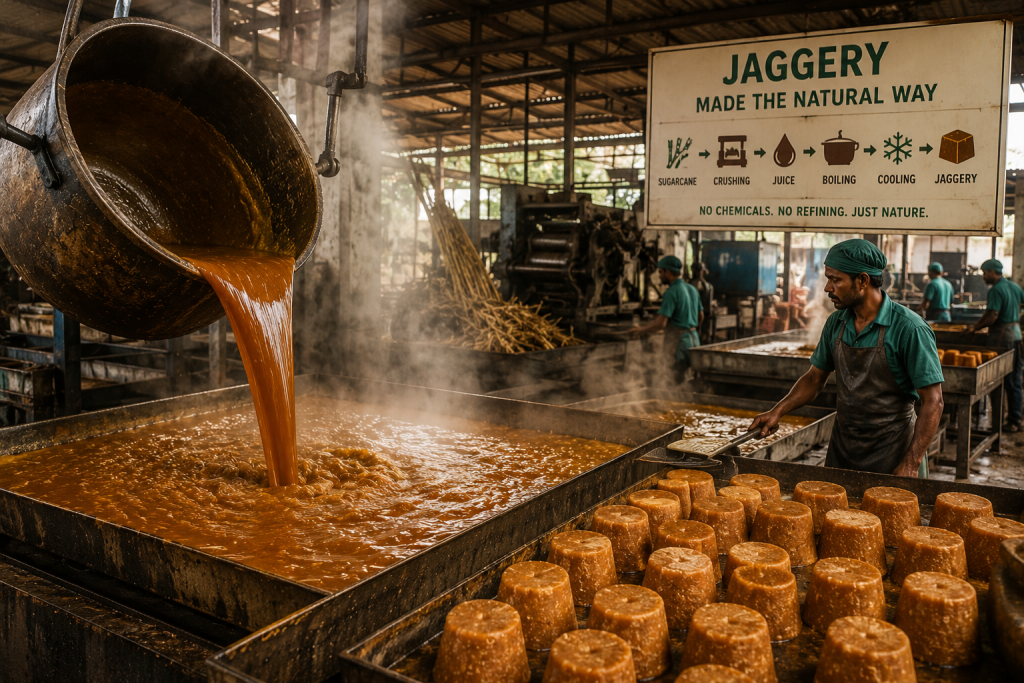
1. Jaggery (Gur): India’s Traditional Sweetener
Why jaggery is better than white sugar? Jaggery is made by evaporating sugarcane juice or palm sap without refining. It has a rich caramel flavor and is a staple in Indian households.
Benefits of Jaggery
- Less processed than white sugar
- Contains small amounts of iron, potassium, and magnesium
- Adds a warm, earthy taste
- Popular in Ayurveda
Best Uses
- Chikki
- Til laddoos
- Payasam
- Chai
- Sambar and chutneys
Substitution Ratio
Use 1 cup grated jaggery for 1 cup sugar (adjust for sweetness and moisture).
2. Dates and Date Paste
Date palm fruit
Dates are naturally sweet and rich in fiber and potassium. Blending soaked dates creates a smooth paste that works beautifully in desserts.
Benefits
- Provides fiber
- Adds minerals and antioxidants
- Creates a naturally rich sweetness
Best Uses
- Energy balls
- Halwa
- Smoothies
- Kheer
How to Make Date Paste
Blend 1 cup soaked dates with ¼–½ cup water until smooth.
3. Honey
Honey
Honey adds floral sweetness and is commonly used in wellness drinks and quick recipes.
Benefits
- Contains trace antioxidants
- Dissolves easily
- Pairs well with spices like cinnamon and ginger
Best Uses
- Herbal teas
- Fruit bowls
- Yogurt
- Salad dressings
Note
Avoid giving honey to infants under one year old.
4. Coconut Sugar
Coconut sugar
Coconut sugar has a mild caramel taste and resembles brown sugar.
Benefits
- Minimally processed
- Contains small amounts of minerals
- Excellent for baking
Best Uses
- Cookies
- Cakes
- Granola
- Sweet parathas
5. Raisin Purée
Raisin
Soaked raisins blended into a paste create a mild, fruity sweetener.
Best Uses
- Barfis
- Oatmeal
- Stuffed rotis
- Breakfast bowls
6. Maple Syrup
Maple syrup
Though not traditional to India, maple syrup works well in fusion recipes and modern desserts.
Best Uses
- Pancakes
- Baked goods
- Yogurt
- Overnight oats
7. Stevia
Stevia
Stevia is a plant-derived sweetener with virtually no calories.
Best Uses
- Tea and coffee
- Low-calorie desserts
- Diabetic-friendly recipes
Considerations
Use sparingly; some people notice a slight aftertaste.
8. Monk Fruit Sweetener
Monk fruit sweetener
Monk fruit sweetener offers intense sweetness without calories or sugar.
Best Uses
- Sugar-free sweets
- Baking
- Hot beverages
Which Sweetener Works Best for Indian Recipes?
| Recipe Type | Best Sweetener |
|---|---|
| Laddoos | Jaggery, dates |
| Kheer and payasam | Jaggery, dates |
| Chai | Jaggery, stevia |
| Chutneys | Jaggery |
| Baking | Coconut sugar |
| Weight-conscious recipes | Stevia, monk fruit |
Are Natural Sweeteners Healthier?
Natural sweeteners are often less processed and may provide trace nutrients, but they still contain calories and can affect blood sugar. The best approach is moderation.
If you have diabetes or other medical conditions, consult a healthcare professional about which sweetener best fits your needs.
How to Transition Away from White Sugar
- Replace half your usual sugar with jaggery or date paste.
- Reduce sweetness gradually over time.
- Experiment with spices like cinnamon, cardamom, and vanilla to enhance flavor naturally.
- Save highly concentrated sweeteners for occasional treats.
Buying Tips
When purchasing natural sweeteners, look for:
- Minimal ingredients
- No added preservatives
- Organic or chemical-free labels when possible
- Reputable brands with transparent sourcing
Final Thoughts
Natural sugar substitutes can help you enjoy traditional Indian recipes with less reliance on refined sugar. Whether you prefer the robust taste of jaggery, the whole-food sweetness of dates, or the calorie-free convenience of stevia, there is an option for every kitchen and dietary preference.
The sweetest change is often the simplest: choosing ingredients that are closer to their natural form.