
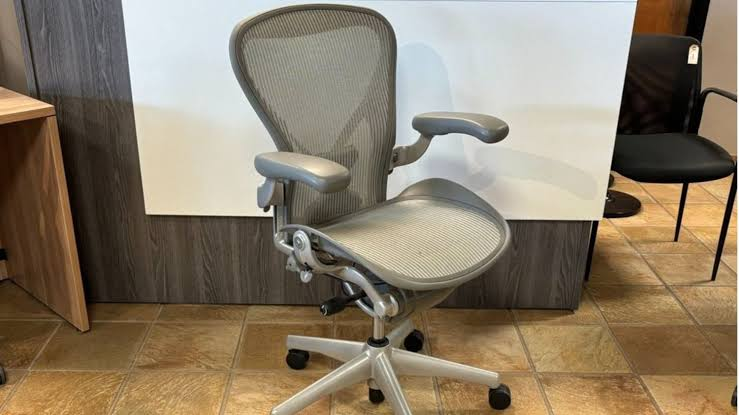
You found a herman miller chair used online. The photos look clean. But you cannot tell if the tilt mechanism is shot. You cannot see cylinder wear from a picture. And if it breaks next week, the seller is gone.
This post gives you a practical 8-point inspection checklist. It also shows you where to find pre-inspected inventory with a return policy that covers surprises.
The 8-Point Condition Checklist: What to Inspect Before You Buy
Every point below catches a failure that listing photos hide. Work through them in order. Skip none.
1. Cylinder Compression
Sit in the chair and adjust the height through its full range.
Listen for hissing. A leaking gas cylinder drops on its own within minutes.
If the chair sinks after you set it, the cylinder needs replacement.
2. Tilt Mechanism and Tension
Rock back and lock the tilt at each stop position.
Turn the tension knob fully in both directions. Resistance should change smoothly.
A grinding sound or frozen adjustment means the mechanism is failing.
3. Armrest Stability
Press down on each armrest with your full weight.
Adjust height, width, and pivot. Every setting should click and hold.
Wobbly or slipping armrests are the most common hidden defect.
4. Seat Pan Foam and Flex
Press your palm into the seat foam. It should spring back immediately.
Check the front edge where thighs rest. This spot packs down first.
A dead spot means the foam has collapsed. Replacement is an extra cost on top of the purchase.
5. Lumbar Support Mechanism
Slide the lumbar pad through its full vertical range.
Tension adjustment should feel firm, not loose or stuck.
If the pad slips out of position under body weight, the internal track is stripped.
6. Casters and Base
Roll the chair on hard floor. Every caster should spin freely.
Inspect each caster stem. Bent stems chew up the base socket over time.
Look for cracks radiating from the center of the five-star base.
7. Fabric and Mesh Integrity
Run your hand across all mesh panels. Snags catch on fingers.
Check seams at the edge of the seat pan. This is where fabric separates first.
Small stains you can clean. Tears in mesh you cannot fix cheaply.
8. Frame and Structural Bolts
Grab the backrest and shake it side-to-side with force.
Tighten every visible bolt with a hex key. If a bolt spins without resistance, the thread is stripped.
A creaking frame under lateral force signals joint fatigue.
How to Test a Used Ergonomic Chair Like a Pro
You do not need to be a technician. You just need to test the right things in the right order.
Start from the bottom. Cylinders fail before armrests. Armrests fail before lumbar pads. Test moving parts from the floor up so you do not waste time on a chair that needs a new cylinder.
Bring your own tools. A standard metric hex key set lets you tighten bolts on the spot. A flashlight reveals cracks that room lighting hides. A tape measure confirms the chair fits your desk height.
Do the 30-second sit test. Sit in your normal working position for a full 30 seconds. Do not bounce, do not adjust. If you feel a pressure point or something feels wrong, trust that. Short tryouts miss real ergonomic problems.
Check under the seat. Tilt the chair forward and look at the mechanism box. Rust, grease leaks, or cracked plastic housings signal neglect. A clean mechanism is a chair someone maintained.
Request the adjustment video. Ask the seller to film a 20-second clip cycling through every adjustment. Photos freeze problems; video reveals them. If the seller refuses, walk away.
Myth-Busting: What You Have Probably Heard Wrong
“Used ergonomic chairs are always shot”
A chair that served five years in a home office has decades of life left. Corporate cast-offs with 24/7 duty cycles are the risky ones. The damage tells you if a chair is done: a sagging cylinder, a frozen tilt, or stripped armrests. Cosmetic scratches and sun-faded fabric mean nothing mechanically. An inspected, cleaned chair with disclosed flaws is as reliable as a floor model. The problem is not age. The problem is buying blind.
Quality used furniture from the premium tier holds value because the materials do not degrade on a human timescale. A steel frame does not fatigue under a 200-pound person. Mesh does not lose tension from sitting. Cosmetic flaws are fixable: scratches buff out, cushions can be reupholstered. Well-chosen secondhand furniture keeps working pieces out of landfills, and pre-owned items have already off-gassed most VOCs.
Finding a herman miller chair used does not have to be a bet on a stranger’s honesty. Skip the peer-to-peer gamble. Shop pre-inspected inventory where flaws are disclosed on the product page and returns are covered for 7 days.
Frequently Asked Questions
What furniture is best to buy secondhand?
Ergonomic office chairs, solid-wood desks, and leather seating hold up best. These items use materials rated for decades of daily use. Avoid anything with glued particle board joints or integrated electronics that cannot be tested in the showroom.
Is it good to buy second-hand furniture?
Yes, for quality pieces. A pre-owned Stressless leather loveseat at $1,930 versus $3,495 new makes the math obvious. You also skip the off-gassing period that new furniture releases for months. Secondhand furniture that is inspected arrives ready to use with most VOCs already gone.
What is the best site to buy used furniture?
The safest option is a marketplace that inspects every listing and discloses damage on the product page. Reperch runs that model across showrooms in San Francisco, Phoenix, and Los Angeles with flat-fee local delivery and nationwide shipping. You get a 7-day return policy on anything the inspection missed instead of chasing a peer seller who blocked your number.
How much should I pay for a used ergonomic chair?
A used premium ergonomic chair in inspected condition typically runs far below its retail price. The price depends on age and cosmetic condition, not mechanical function. A chair with disclosed scratches and a fully functional mechanism is a better deal than a clean-looking chair with an untested tilt.
Every day you spend in a bad chair costs you in back pain and lost focus. That cost compounds. A month of discomfort is not free. A year of poor posture leaves a bill your body pays with interest.
Buying from a peer seller saves maybe a hundred dollars up front. A failed cylinder or torn seat pan wipes out that savings and leaves you with a heavy paperweight. There is no return label, no refund, and no recourse.
The alternative takes the same time as scrolling classifieds. You browse inspected inventory where every listing tells you exactly what you are getting. If something slips past the inspection, you send it back within a week. No negotiating, no chasing, no regret.
Your chair is the tool you use more than any other. Buy it with the same diligence you would use for a car. Run the checklist. Demand transparency. Walk away from anything that cannot prove its condition.